AI Search Is Changing Google — What Nepali Businesses Should Do
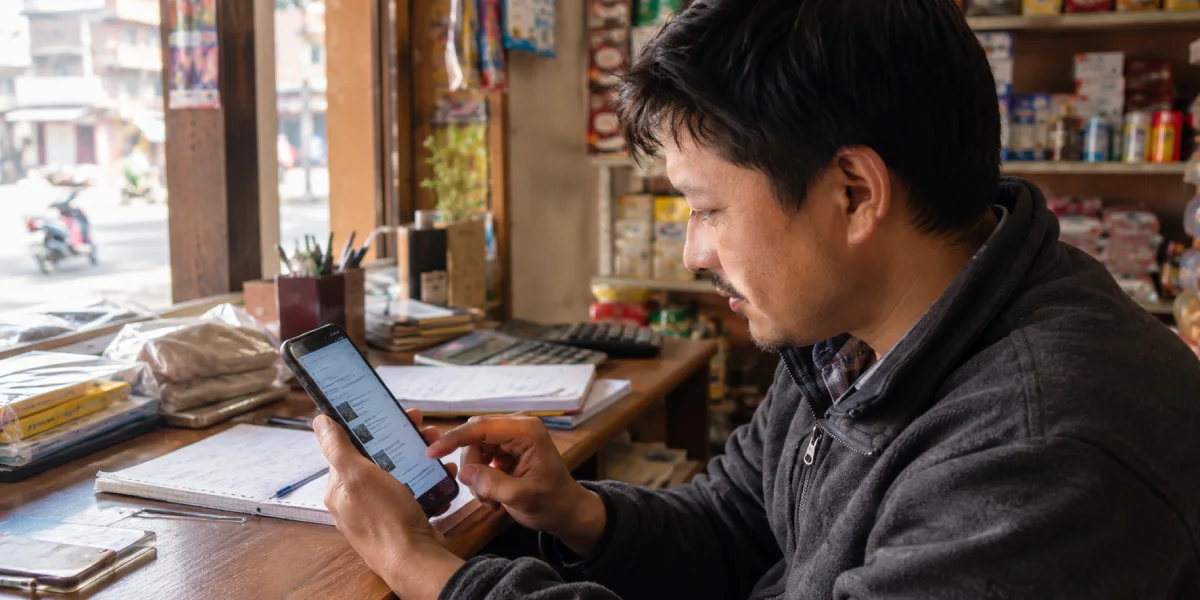
People are increasingly asking ChatGPT and Google's AI Overviews for recommendations instead of scrolling search results. Here's what that shift means for a business in Nepal.
AI search for businesses in Nepal

For years, showing up on Google meant one thing: rank on the first page of blue links. That’s no longer the whole picture. A growing share of searches now end with an AI-generated answer instead of a list of websites to click through — and that answer either mentions a business, or it doesn’t.

From Blue Links to AI Answers

nstead of typing a keyword and scrolling through results, more people now ask a direct question to ChatGPT, Google’s AI Overviews, Perplexity, or Gemini and get a single answer back. This shift has a name in the industry: answer-engine optimization, also called generative engine optimization.

or a business, this changes what “ranking” even means. It’s no longer only about being link #3 on a results page — it’s about being the business an AI tool chooses to mention at all.

What Answer Engine Optimization (AEO) Actually Means

To get picked up by these AI tools, a business’s information needs to be clear, specific, and consistent everywhere it appears. That means:
  • Writing content that directly answers the real questions customers ask, in plain language, using headings phrased the way people actually search
  • Backing up claims with real specifics rather than vague marketing language
  • Keeping your Google Business Profile accurate and complete, since AI tools lean heavily on trustworthy, well-structured local listings
If an AI assistant can’t find clear, consistent information about your business, it will simply recommend a competitor instead.

Why This Matters Even More for a Business in Nepal

Most small businesses are still marketing the way they did a few years ago, which means the businesses that adapt now have a real head start. Across the industry, 2026 marketing is shifting toward being more data-driven, personalized, and AI-powered, changing how brands connect with their audience. Nepal’s businesses are competing in the same search results as everyone else — being AI-ready isn’t optional anymore, it’s a head start over competitors who haven’t caught up yet.

Short-Form Video Is Part of Search Now Too

Search behavior isn’t only shifting toward AI chat — video has quietly become a search engine of its own. Short vertical clips on Instagram Reels, TikTok, and YouTube Shorts now get more reach than almost any other format, and the platforms actively favor them. The reassuring part for small businesses: polished production isn’t the expectation anymore — simple, honest videos shot on a phone often perform just as well, sometimes better.

How to Prepare Your Business for AI Search

Quick Action Checklist

  • Claim and fully complete your Google Business Profile — hours, services, photos, and category
  • Write website content in the plain language your customers actually use, structured around real questions (“How much does X cost in Kathmandu?”)
  • Post a few short, simple videos regularly instead of one polished video occasionally
  • Keep your business name, address, and phone number identical everywhere online
None of this requires a big budget. It requires being clear, consistent, and easy for both people and AI tools to understand.

The Takeaway

earch is splitting into two paths — traditional results and AI-generated answers — and a business needs to show up in both. The businesses that get their information in order now will be the ones AI tools recommend later this year, while their competitors are still catching up.

Table of Contents

Scroll to Top