
Why Raw, Lo-Fi Content Is Beating Polished Ads in 2026
A local momo shop owner films a 20-second clip on her phone, and it outperforms a paid campaign a bigger competitor spent thousands on. That's not luck. It's exactly where social media is heading in 2026.
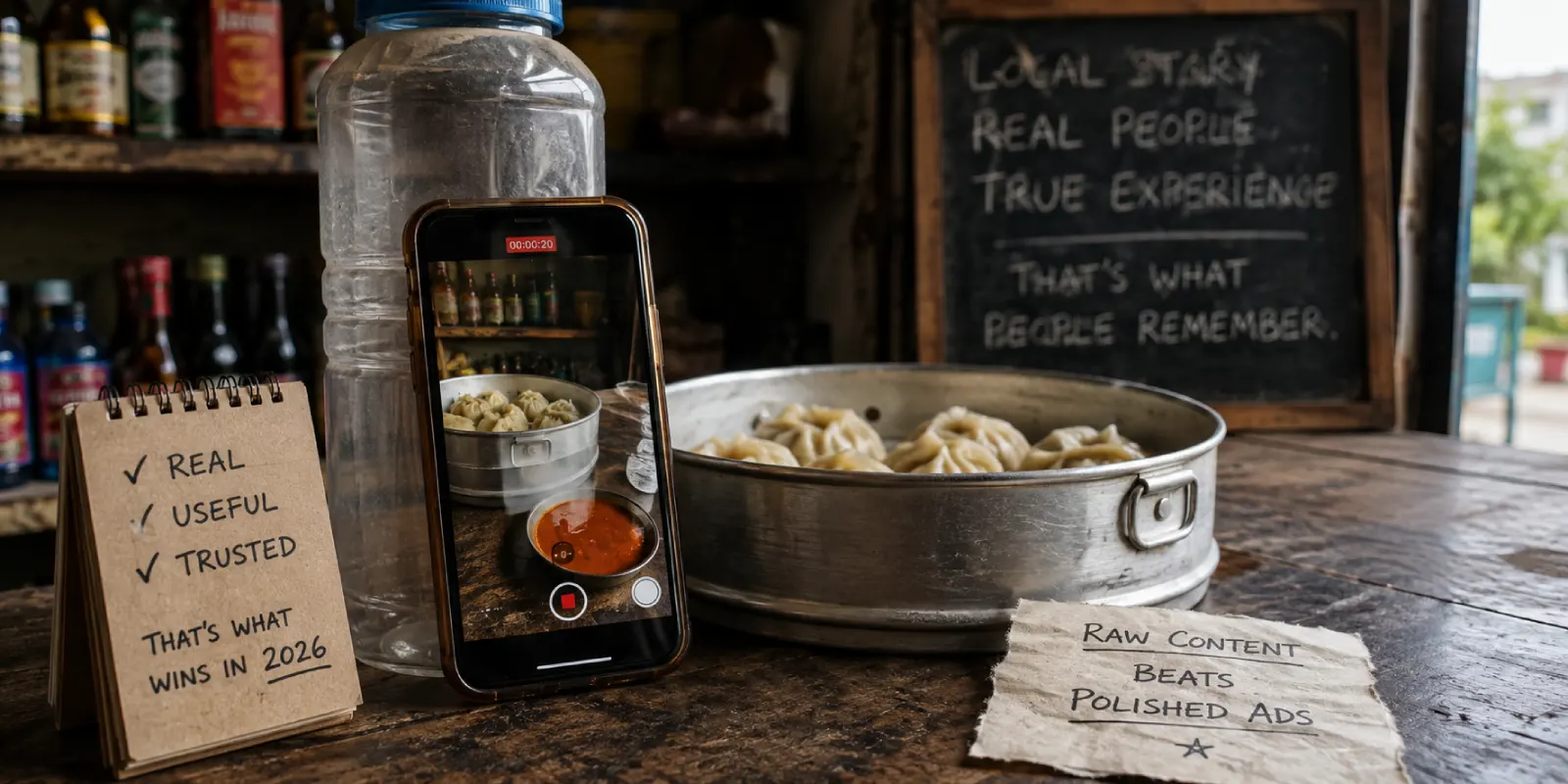
Last month, a tour operator in Pokhara posted a video of the owner explaining—out of breath, in his own words—why a certain trek route gets overbooked in October. No graphics. No trending audio. Just a phone propped against a water bottle. It got more replies and DMs than the agency’s last three “proper” campaigns combined.
That’s not a fluke. It’s the direction social media has been moving all year, and if you’re still trying to look like a billboard, you’re getting scrolled past.
Polished Ads Are Quietly Losing Ground
For years, “good” social media meant clean edits, branded Canva templates, and a hired videographer if the budget allowed. That’s changing fast. Audiences in 2026 have developed a sixth sense for spotting a script, and they scroll past it instantly.
What stops the scroll now is something that feels unplanned: a founder talking straight to the camera, a customer’s unfiltered reaction, or a behind-the-scenes moment nobody dressed up for.
This isn’t a small shift. Marketers tracking 2026 platform behavior are seeing the exact same pattern everywhere. Raw, low-polish posts are consistently outperforming glossy brand campaigns because people trust what looks real a lot more than what looks made.
What "Raw" Actually Looks Like for a Business Here
This doesn’t mean posting badly on purpose. It means dropping the performance. For a Nepali business, “raw” could look like:
- A shop owner filming herself restocking shelves and casually explaining why she picked a new supplier.
- A cleaning service posting the actual before-and-after of a water tank job—dust, mud, and all—instead of a glossy digital flyer.
- A training institute’s instructor answering one real student question on camera, instead of reading a scripted “testimonial.”
None of it needs a camera crew. Honestly, most of it works better without one.
Social Media Isn't Just for Reach Anymore — It's for Search
Here’s the part a lot of local businesses still miss: people are searching social platforms the way they used to search Google. Someone deciding between two SEO agencies in Kathmandu, or looking for the best cafe in Jhamsikhel, is just as likely to type that into Instagram or TikTok’s search bar.
The Questions Your Content Must Answer
If your content never answers a real question in plain words, that search traffic goes to whoever does. The posts worth making aren’t just “engaging”—they’re the ones that actually answer what a buyer would type in:
- How much does this cost?
How long does it take? - Does this work for a small business?
- What do I do if X goes wrong?
None of this requires a big budget. It requires being clear, consistent, and easy for both people and AI tools to understand.
Do You Still Need to Edit Anything?
Yes—just a lot less than most businesses think. The golden rule for 2026? Bad audio will kill a video, but bad lighting won’t.
Shaky framing that makes someone dizzy, or a video so long it loses the point, still won’t work. The edit that helps is trimming the fluff and making sure people can actually hear you. The edit that hurts is the one that makes it look like an ad again.
Where This Leaves Nepali Businesses
The businesses about to benefit most from this shift aren’t the ones with the biggest ad budgets. They’re the ones willing to just turn the camera on and say something true.
That’s a massive, genuine advantage for smaller businesses in Nepal, most of whom were never going to out-produce a big corporate agency anyway. Start with just one thing this week: film 20 seconds of something true about your business. Answer a real question, show a real process, and post it without dressing it up. Then watch what happens before you decide it needs more polish.